What is the difference to normal monovision?+
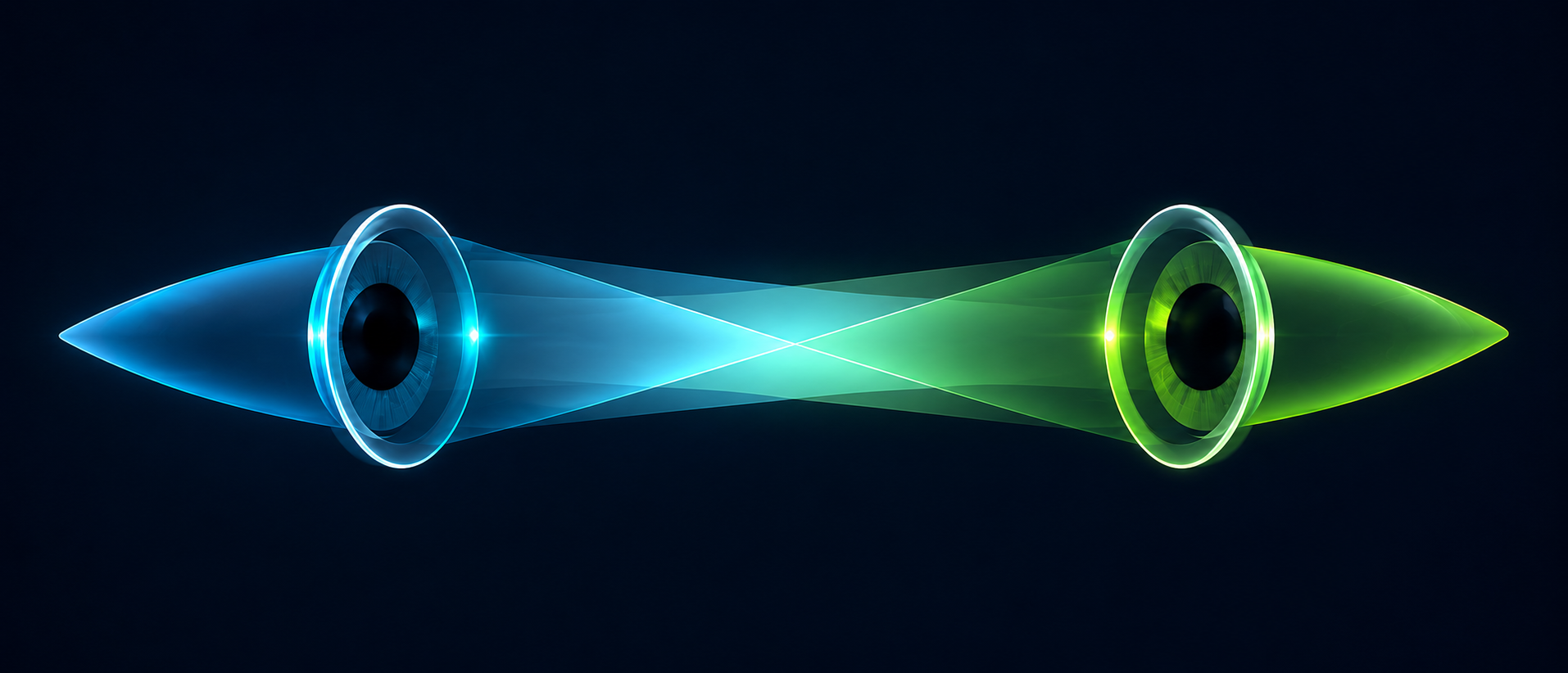
With classic monovision, one eye is usually set more strongly for distance and the other for near. Laser Blended Vision also works with a small difference between the two eyes. In addition, the cornea is treated in such a way that the usable range of sharp vision is intended to be extended.
The aim is the most seamless possible interplay of both eyes for distance, intermediate zone and near. How well this works individually depends, among other things, on the eye findings, viewing habits and the adaptability of the visual system.
How long does adaptation take?+
After the treatment, the brain must get used to the changed interplay of both eyes. The duration of this adaptation varies individually.
Some patients cope well within a short time, while for others adaptation can take longer. During this phase, individual visual zones or perception may still change. Personal progress is assessed during follow-up examinations.
Can I see completely without glasses afterwards?+
Laser Blended Vision aims to reduce dependence on glasses for various distances. However, complete freedom from glasses cannot be guaranteed.
Depending on your starting situation, individual outcome and visual task, glasses may still be useful or necessary – for example for very small print, longer reading, special vision requirements or certain situations in everyday life.
Who is Laser Blended Vision not suitable for?+
Laser Blended Vision is not suitable for every eye. Unstable vision values, certain corneal changes, a cornea unsuitable for the planned treatment, pronounced conditions of the ocular surface or other eye conditions may, for example, speak against a laser-based treatment.
Personal vision needs and expectations also play an important role. Whether the procedure is an option is therefore only decided after a thorough ophthalmological examination and individual consultation.
What risks are there?+
Laser Blended Vision is a refractive laser procedure and – like other corneal laser treatments – may be associated with side effects and complications.
Among other things, temporarily dry eyes, fluctuating vision, glare sensitivity, halos or changes in contrast vision are possible. In addition, residual refractive error may remain or additional correction may be required later. In rare cases, further complications are possible.
Which risks are relevant in your individual case depends on your individual eye findings and the chosen treatment technique and is discussed medically before a procedure.
Treatment outcome and healing process can vary individually. Final suitability for Laser Blended Vision can only be assessed after a thorough ophthalmological examination.