Who is RLA suitable for?
- From around 45 years of age
- Long-sightedness (hyperopia)
- Short-sightedness (myopia)
- Astigmatism
- Age-related long-sightedness (presbyopia)
- For thin corneas or where laser is not suitable
More vision quality. Less dependence on glasses.
In refractive lens exchange, the natural lens is replaced with a high-quality artificial lens – for sharp vision in every situation in life.
Start the check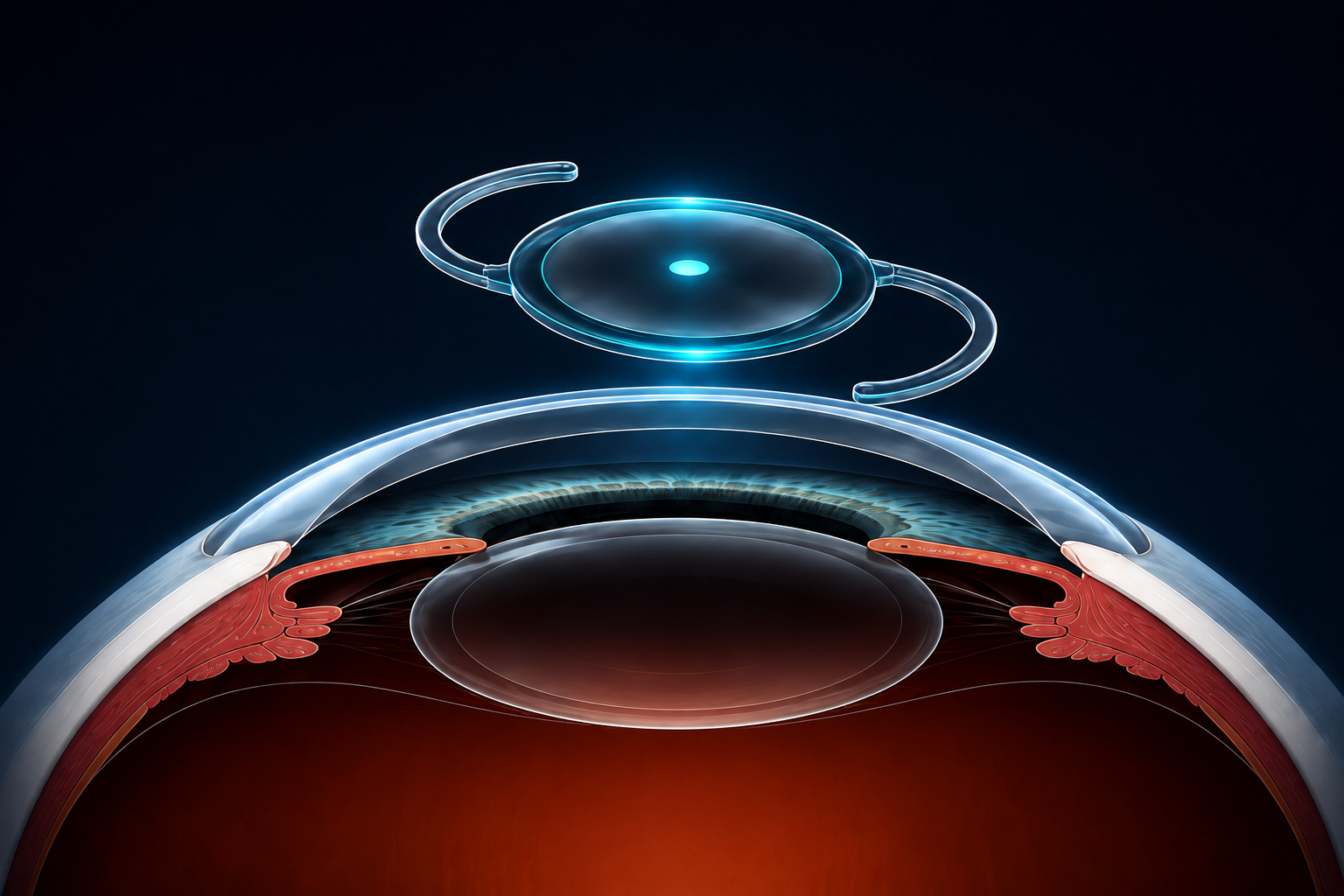
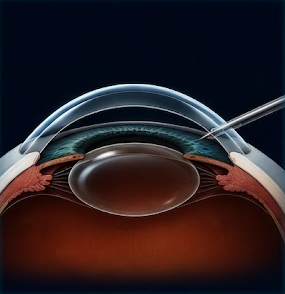 1
1A tiny incision (approx. 2–3 mm) is made in the cornea – without altering it.
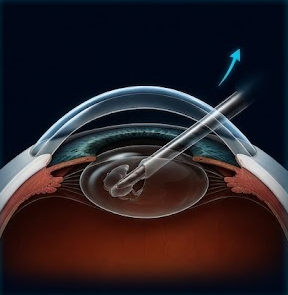 2
2The natural lens is removed gently. This is done precisely and tissue-friendly using state-of-the-art technology.
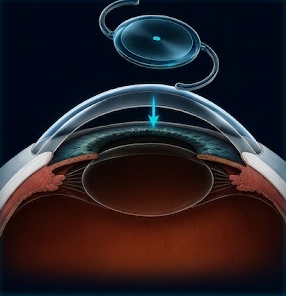 3
3The individually selected artificial lens is inserted into the eye and permanently secured. It takes over the function of the natural lens.
Learn more about the different surgical methods (phacoemulsification & FLACS) and the artificial lens types (monofocal, EDOF, multifocal, toric).
Minimal intervention with a high level of safety and many years of experience.
Clear vision at various distances – more freedom in everyday life.
The artificial lens remains in the eye permanently. In some cases, follow-up treatment may be necessary.
Many people enjoy greater freedom in everyday life – with no glasses or contact lenses, or with significantly less need for them.
The procedure is usually performed under local anaesthesia, generally with eye drops. During the treatment, sensations of pressure or touch may be perceived. However, individual perception can vary.
The first recovery often takes place within a few days. However, more time may pass before vision fully stabilises. The individual course depends, among other things, on the eyes, the artificial lens used and the healing process.
Light physical activities are often possible again relatively early, depending on the healing process. You should wait with more intense sport, swimming or activities with an increased risk of injury until this has been approved after the medical check-up.
The implanted artificial lens is generally intended to remain in the eye permanently. Independently of this, the eye and vision can change over the course of life.
A later exchange of an artificial lens may be medically possible in certain situations. Whether this is sensible and justifiable must be assessed individually by an ophthalmologist.
As with any surgical procedure on the eye, possible risks and side effects exist. These may include, for example, temporary visual impairment, glare or light phenomena, inflammation and, rarely, more serious complications. Which individual risks apply is discussed as part of the medical pre-examination and consultation.
Hinweis: Diese Informationen ersetzen keine ärztliche Untersuchung. Ihre Augenärztin oder Ihr Augenarzt prüft, ob ein Linsenaustausch (RLA / CLE) medizinisch für Sie geeignet ist.
Book your non-binding check now.
ⓘ Note: This information does not replace a medical examination. Your eye doctor will determine which treatment is medically suitable for you.