Is cataract surgery dangerous?+
Cataract surgery is an established procedure and most cases proceed without serious complications. As with any surgical procedure on the eye, however, there are risks and possible side effects. Which individual risks apply is assessed as part of the ophthalmological pre-examination and consultation.
When is surgery advisable?+
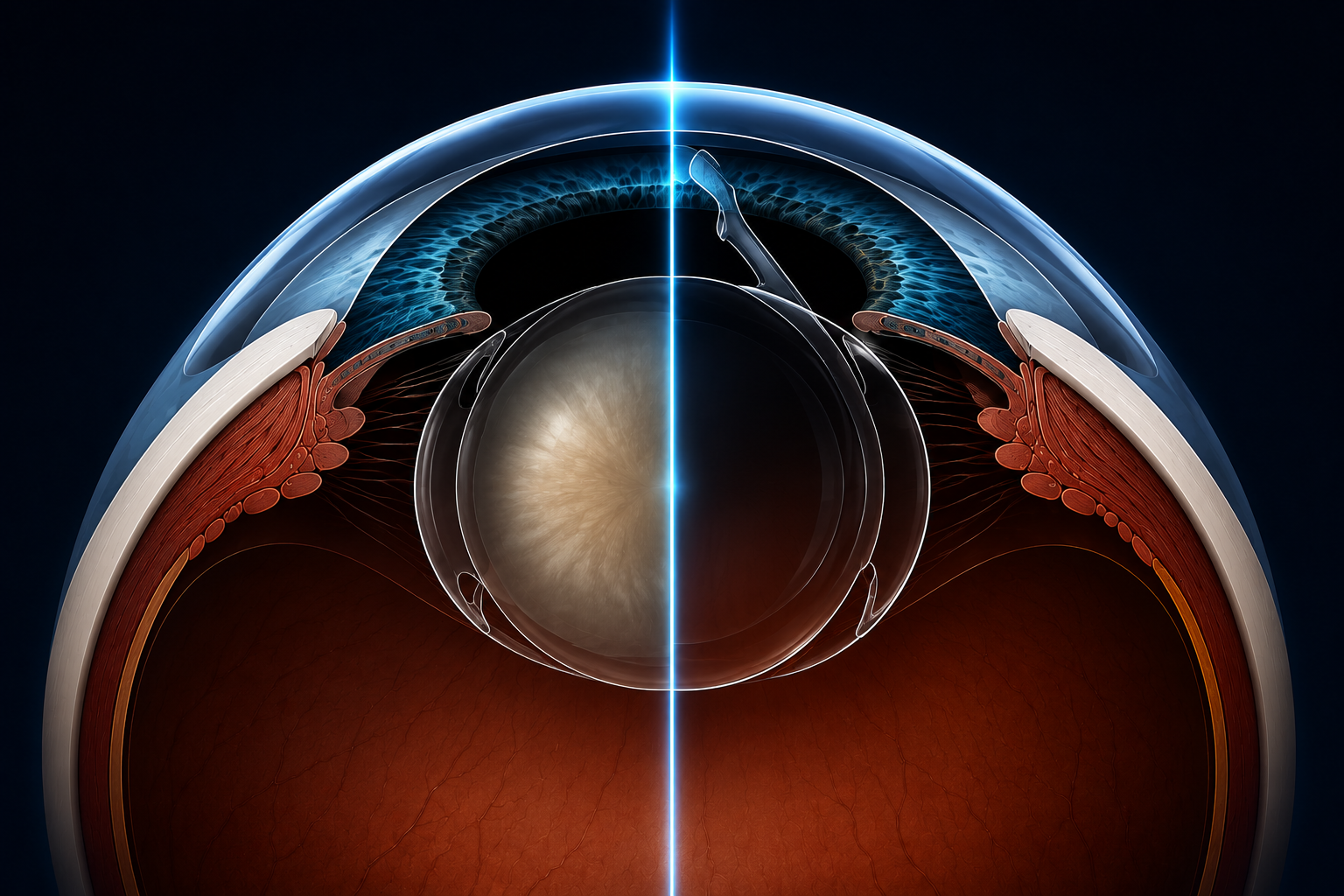
Surgery may be considered when the cataract increasingly affects vision and everyday life. The appropriate time depends not only on age or the extent of the lens opacity, but also on your individual visual situation, personal requirements and the ophthalmological findings.
How long does healing take?+
Recovery varies individually. Vision often improves soon after the operation, but full stabilisation may take longer. The treating ophthalmologist will inform you about your individual progress and the recommended follow-up examinations.
How long does an artificial lens last?+
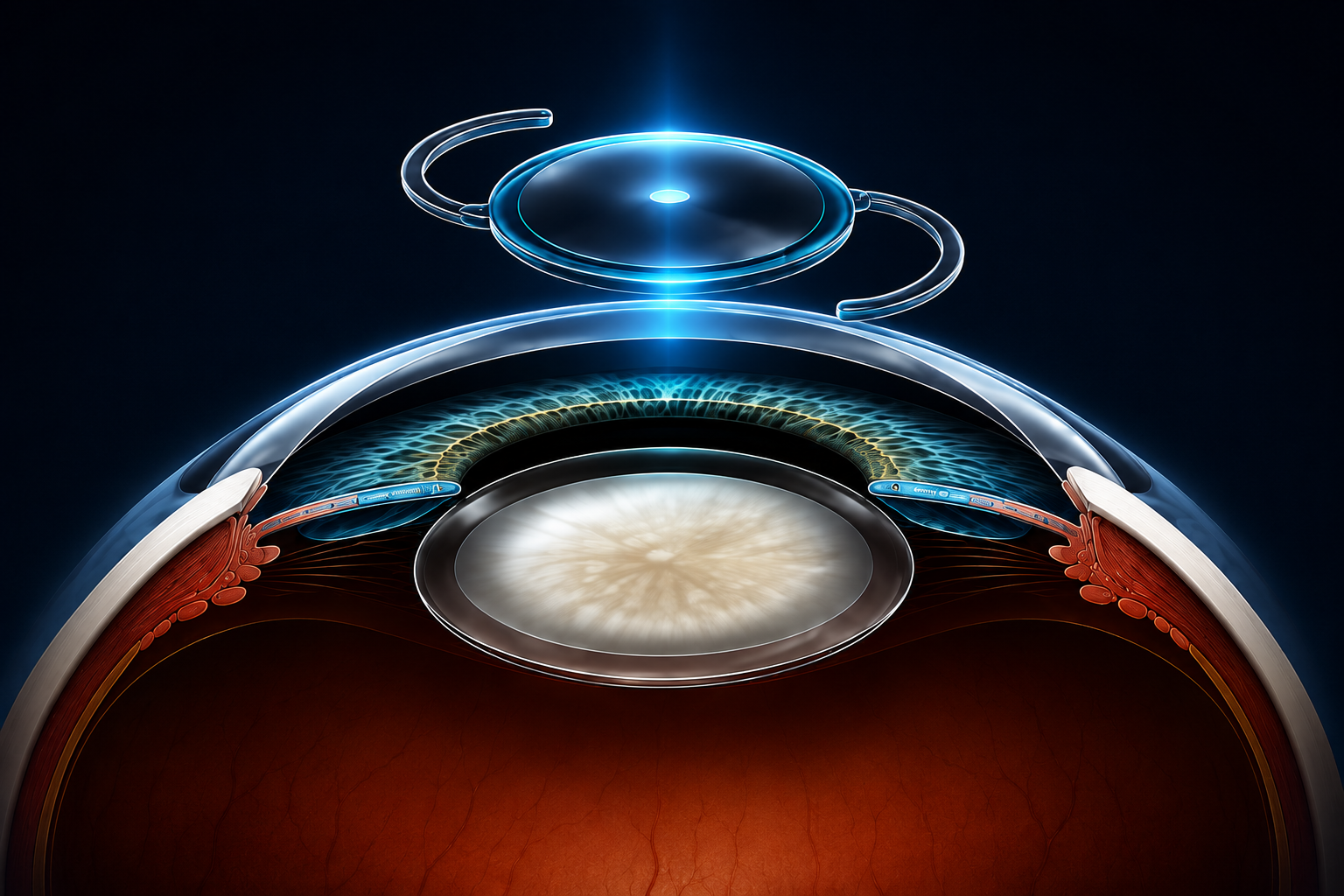
The artificial lens used in cataract surgery is generally intended to remain in the eye permanently and normally does not need to be routinely replaced. Independently of this, the eye and vision can change over the course of life.
Can I choose a specific lens?+
Different artificial lenses and treatment concepts are available. Which option is suitable depends, among other things, on the eye findings, your individual vision needs and the desired viewing distances. The selection is made after a thorough examination and personal ophthalmological consultation.
What risks are there?+
As with any procedure on the eye, complications can occur. These include, for example, inflammation, infection, changes to the retina, problems with the position of the artificial lens or later clouding of the lens capsule. Serious complications are rare. The treating ophthalmologist will inform you in detail about your personal risks and possible alternatives before the operation.
Hinweis: Diese Informationen ersetzen keine ärztliche Untersuchung. Ihre Augenärztin oder Ihr Augenarzt prüft, ob eine Katarakt-Operation medizinisch für Sie geeignet ist.