WHO IS IT SUITABLE FOR?
- Astigmatism from approx. 1.0 D
- Patients who wish for better vision quality
- Patients who would like to reduce their dependence on glasses
- Patients with irregular vision due to astigmatism
Correction of cataracts and astigmatism in a single procedure.
Toric intraocular lenses (IOL) correct astigmatism and cataracts at the same time. So you enjoy sharp, clear vision – without compromise.
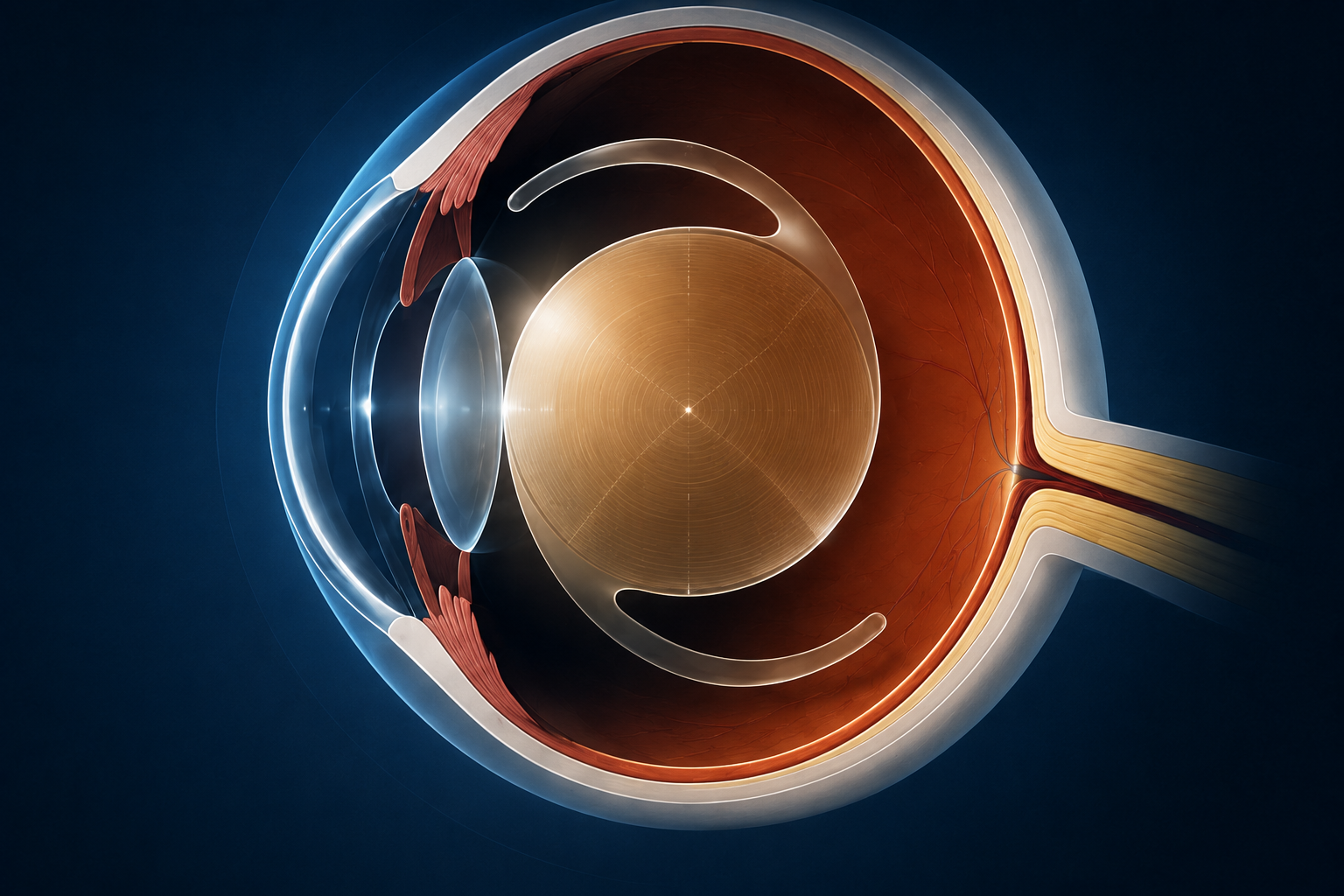
Toric lenses compensate for astigmatism and sustainably improve your vision quality – for more sharpness and less dependence on glasses.
Toric IOLs have special cylindrical optics that compensate for the irregular curvature of the cornea. This means light rays hit the retina precisely again – for clear and distortion-free vision.
A toric intraocular lens may be an option in cataract surgery if there is additionally a relevant, in particular regular, astigmatism. It can help to reduce the astigmatism and improve vision at the planned target distance. Whether a toric lens is suitable is assessed medically on the basis of the individual measurement values and the eye findings.
Before the operation, the cornea is carefully measured. Among other things, the power and orientation of the astigmatism are determined. On the basis of these measurements, the required toric lens is calculated and its intended alignment planned. Precise measurement and positioning are important for the desired correction.
A toric lens is deliberately positioned on the calculated axis during the operation. In individual cases, its position can change after the operation. A relevant rotation can reduce the astigmatism-correcting effect. If necessary, re-alignment or another additional treatment may be required.
Yes, toric optics are also available in various lens concepts, for example as monofocal or multifocal variants. Which combination is an option depends on the eye findings, the astigmatism and the individual vision needs. The selection is made after a thorough ophthalmological examination and consultation.
With a toric IOL, the risks of cataract surgery and lens implantation generally apply. In addition, residual astigmatism may remain or the lens may deviate from the intended axis, which can reduce the desired correction. In individual cases, further measures may be required. Your individual risks are discussed before the operation as part of the medical consultation.
Toric IOLs can be combined with different lens types.
Our lens specialist thoroughly examines your eyes and recommends the optimal solution for your needs.
ⓘ Note: This information does not replace a medical examination. Your eye doctor will determine which treatment is medically suitable for you.